Logistics warehouses, prefabricated metal buildings, and distribution hubs are theoretically the perfect candidates for solar energy. They offer massive surface areas and usually operate during peak daylight hours. However, facility managers often hit a hard wall during the feasibility phase: Structural Load Limitations.
Modern industrial construction prioritizes cost-efficiency, resulting in "lightweight roofs" designed to carry snow and wind, but not the heavy dead load of traditional photovoltaic (PV) systems.
If you are planning a solar installation on a TPO, PVC, or metal roof with low load-bearing capacity, you cannot use standard engineering logic. Here is a breakdown of why traditional glass fails in this sector and how lightweight flexible technology provides a viable, high-ROI alternative.
1. The "Dead Load" Dealbreaker
The most common reason commercial solar projects stall is the weight of the hardware. Standard glass solar panels weigh between 18–22 kg/m². When you add the aluminum racking, clamps, and concrete ballast required to keep them in place, the total system weight often exceeds 25 kg/m².
The Conflict: Most lightweight industrial roofs are engineered with a safety margin of only 10–15 kg/m² for additional equipment.
The New Metric: Power-to-Weight Ratio (W/kg)
To make solar viable on these structures, you must stop calculating in Watts per Square Meter ($W/m^2$) and start calculating in Watts per Kilogram ($W/kg$).
Traditional Glass PV: Delivers approx. 10 W/kg (High weight, standard power).
Ultralight Flexible PV (e.g., Sungold PA219): Delivers approx. 59 W/kg (Low weight, high power).
2. Protecting the Roof Membrane and Warranty
A critical oversight in solar planning is the interaction between the solar hardware and the roof material.
Metal Sheets: Racking systems often require penetrating the metal, introducing rust risks.
TPO/PVC Membranes: Ballasted systems (heavy concrete blocks) can shift over time due to thermal expansion and contraction, acting like sandpaper that wears down the waterproofing layer.
The Bonded Solution
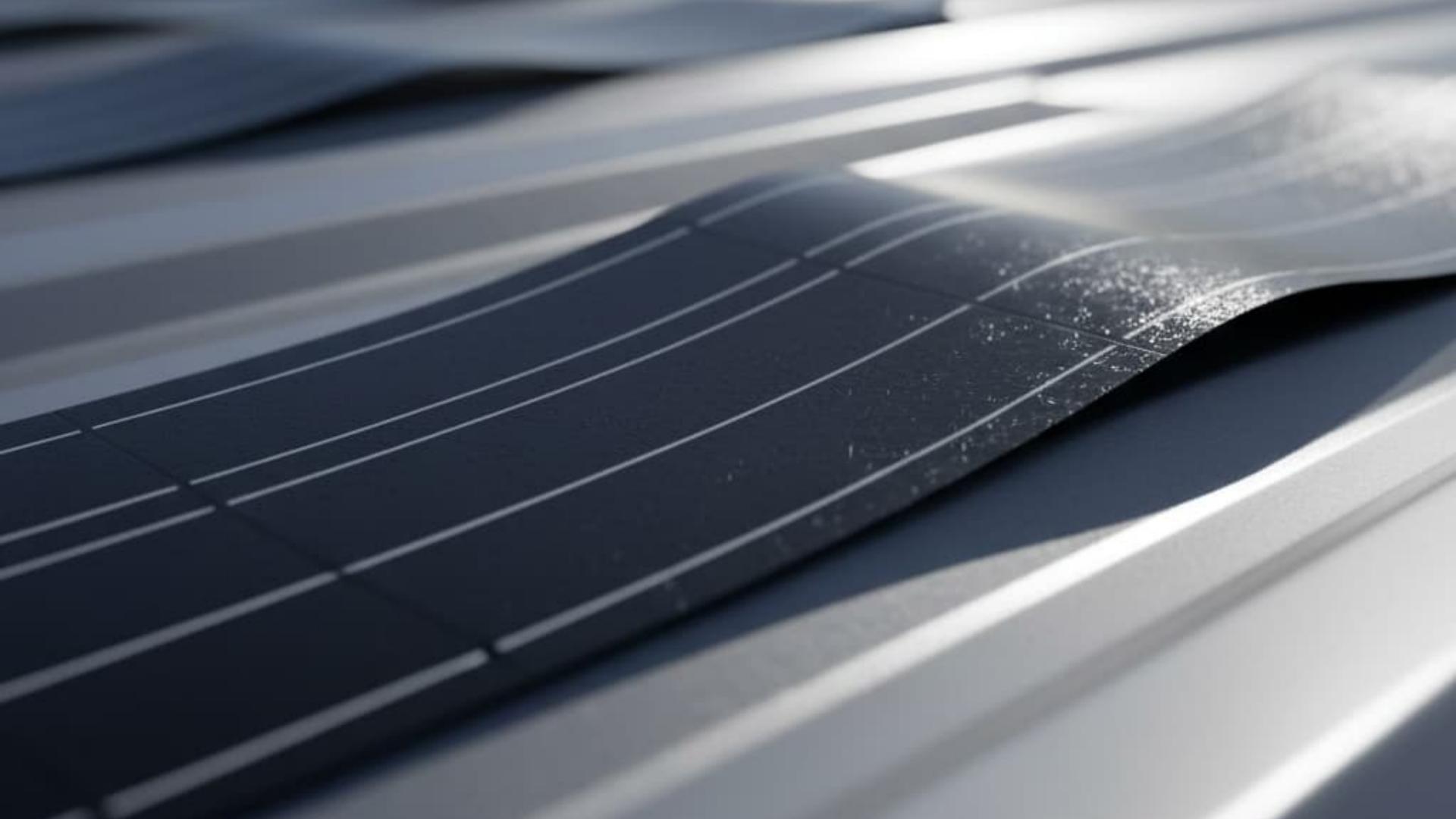
Lightweight modules utilize a direct-bonding installation method. This eliminates the need for rails and heavy ballast. Because the modules are flexible, they expand and contract with the roof surface rather than fighting against it. This approach preserves the integrity of the waterproofing membrane and, crucially, maintains the original roof warranty.
3. Aerodynamics: The Hidden Advantage of "Flat" Solar
On a lightweight structure, wind uplift is just as dangerous as heavy weight. Traditional tilted panels act as sails—catching the wind and transferring massive stress loads to the roof structure.
Flexible panels, such as the Sungold PA219, offer a significant aerodynamic advantage. They are installed flush against the roof surface (0-degree tilt). This "stealth" profile means:
-
Zero Wind Load Transfer: The wind passes over the panels, not under them.
-
No Ballast Required: You don't need heavy weights to hold them down.
-
Aesthetics: The installation is invisible from the street level.
4. Rethinking the Financial Model (TCO vs. CAPEX)
Many procurement officers hesitate at the upfront price per watt of flexible solar compared to cheap glass panels. However, this is a flawed comparison. You must look at the Total Cost of Ownership (TCO).
When you install glass panels on a weak roof, you trigger a chain of hidden costs:
Structural Reinforcement: Steel beams and columns to support the weight (High Cost).
Installation Labor: Hauling heavy glass and constructing racking systems takes days or weeks.
Business Interruption: Construction often interferes with internal operations.
The Economic Reality of Lightweight Solar:
| Cost Factor | Traditional Glass System | Sungold Lightweight System |
| Roof Reinforcement | Required (Major Expense) | None ($0 Cost) |
| Installation Speed | Slow (Heavy lifting required) | Fast (Peel & Stick / Glued) |
| Wind Load Risk | High (Requires Ballast) | Negligible (Aerodynamic) |
| Payback Period | 6–8 Years (due to construction costs) | 3–5 Years (due to lower BOS costs) |
5. Strategic Design: Adapting to the Roof, Not Vice Versa
Finally, lightweight roofs often feature irregular shapes, curves, or obstructions like skylights and HVAC vents. Rigid glass panels are rectangular and unforgiving; they require long, straight rows to be efficient.
Flexible modules offer geometric freedom.
Curved Surfaces: Can bond to arched roofs (common in sports facilities).
Obstacle Avoidance: Can be arranged in custom layouts to dodge shadows from vents or skylights.
Drainage: Their thin profile does not block water flow, preventing the "ponding" issues common with rail-mounted systems.
Conclusion:
If your building has a load-constrained roof, trying to force a traditional glass system onto it is a financial and structural risk. The solution lies in using technology specifically engineered for the environment.
By utilizing lightweight, direct-bond modules like the PA219 series, you eliminate the need for structural steel work, protect your roof’s waterproofing, and achieve a faster, safer return on investment.
✉️Email: exportdept@snadi.com.cn
Website:
www.snadisolar.com
www.snatsolar.com
☎️WhatsApp / WeChat: +86 18039293535